Habitat for Humanity
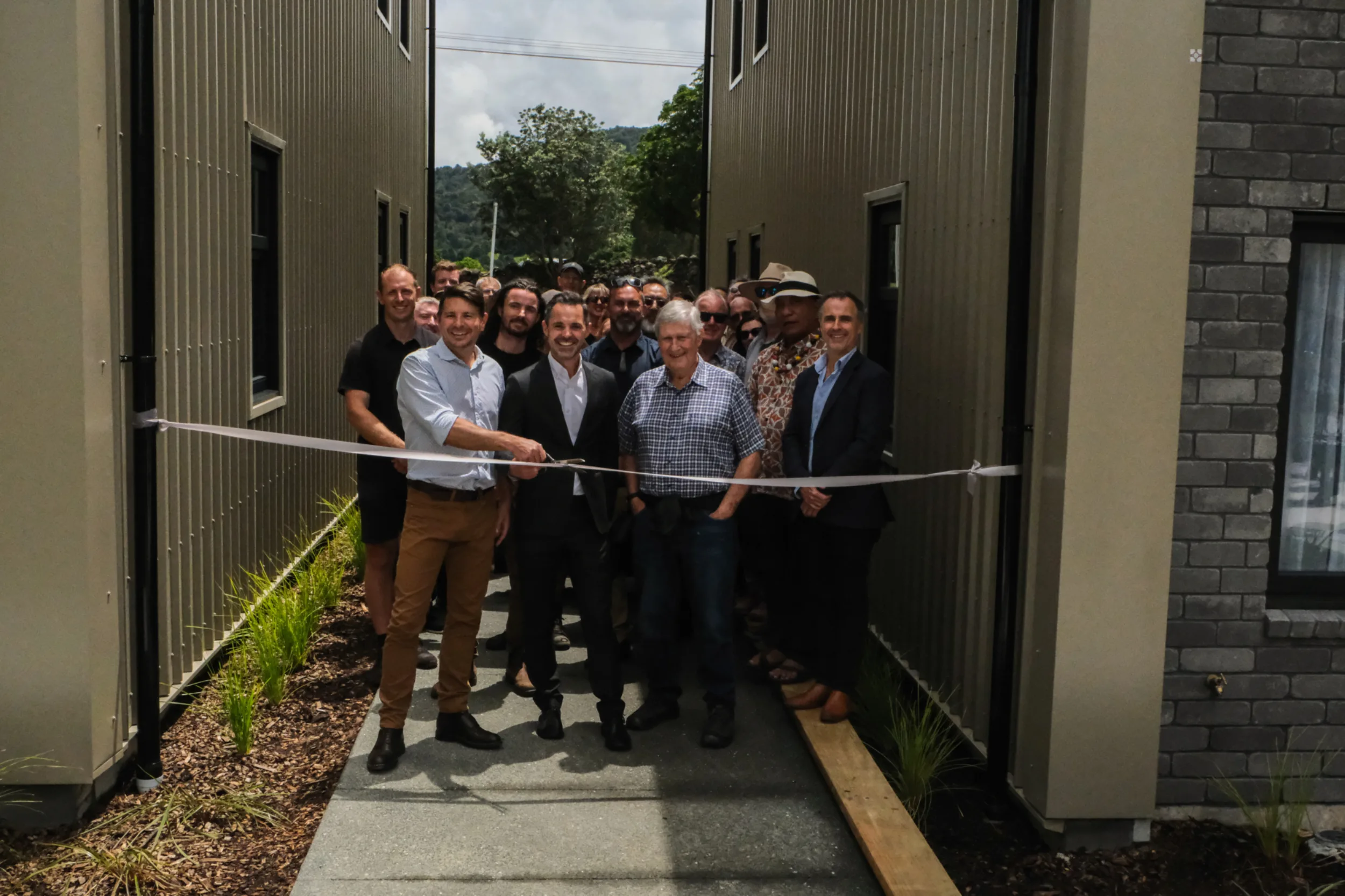
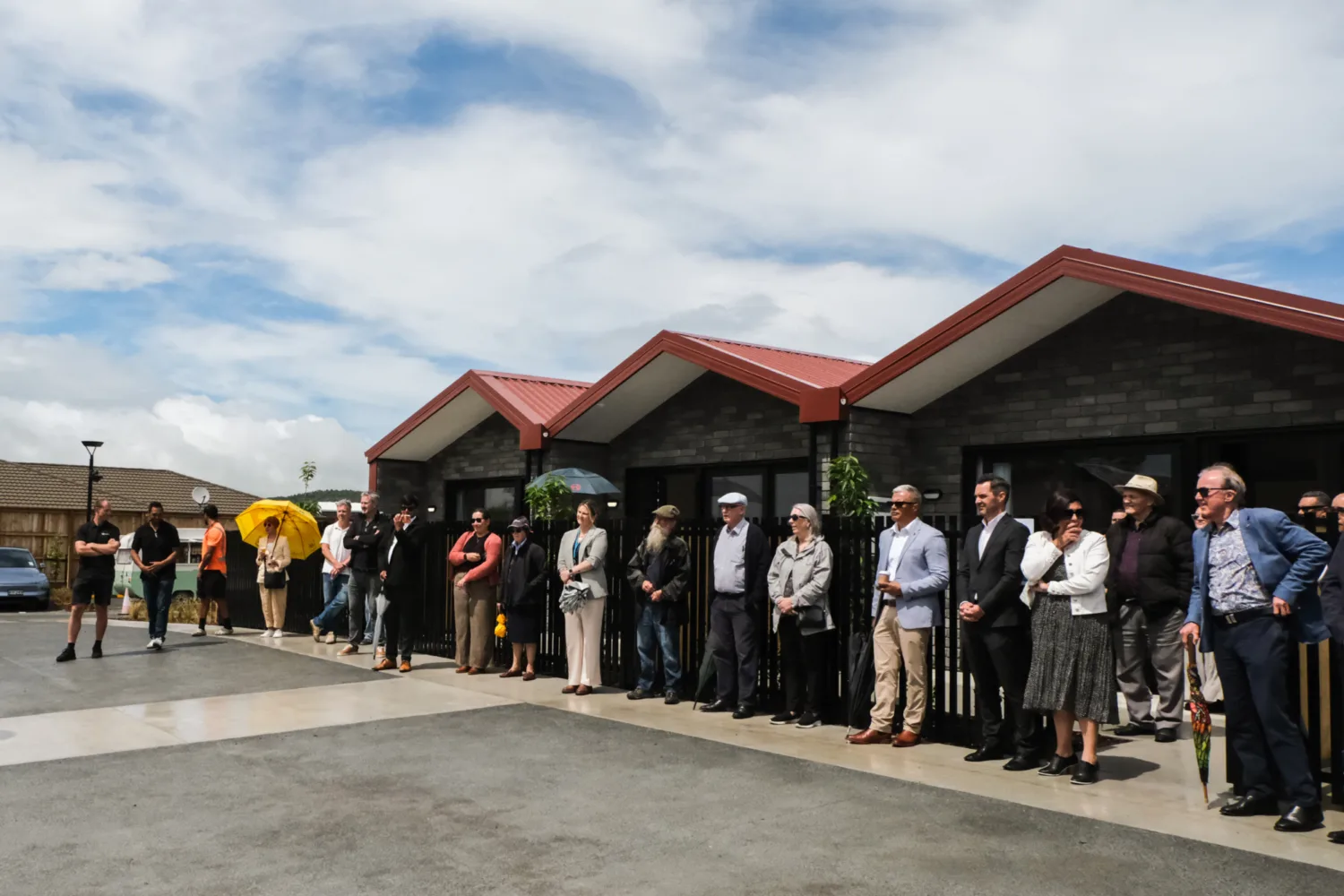
Twenty-six new public housing homes for seniors have been completed in Whangārei, through a partnership between Habitat for Humanity and Whangārei District Council, adding much-needed affordable and accessible housing as the district prepares for significant growth in its older population.
Habitat for Humanity’s newest affordable housing development in Maunu responds directly to an ongoing, unmet need for affordable homes for seniors. Habitat’s homes within the development are available to people aged 55+, while the eight homes purchased by Whangārei District Council are for residents aged 65+ with limited financial means.
Council’s 2023 and 2024 Pensioner Housing Reviews identified growing demand, particularly for one-bedroom homes near Whangārei Hospital. People aged over 65 are expected to be the district’s fastest-growing age group over the next 15 years.
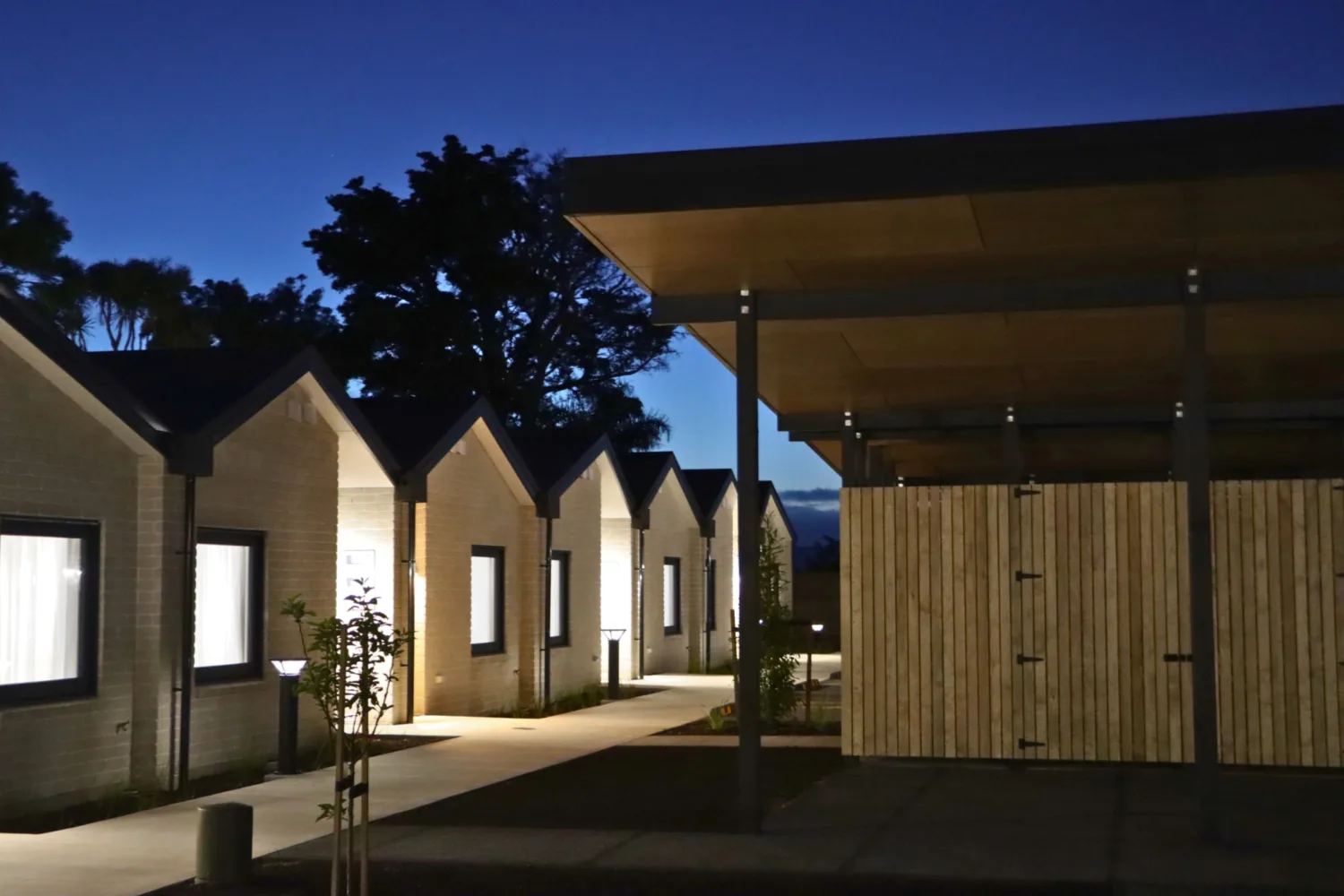
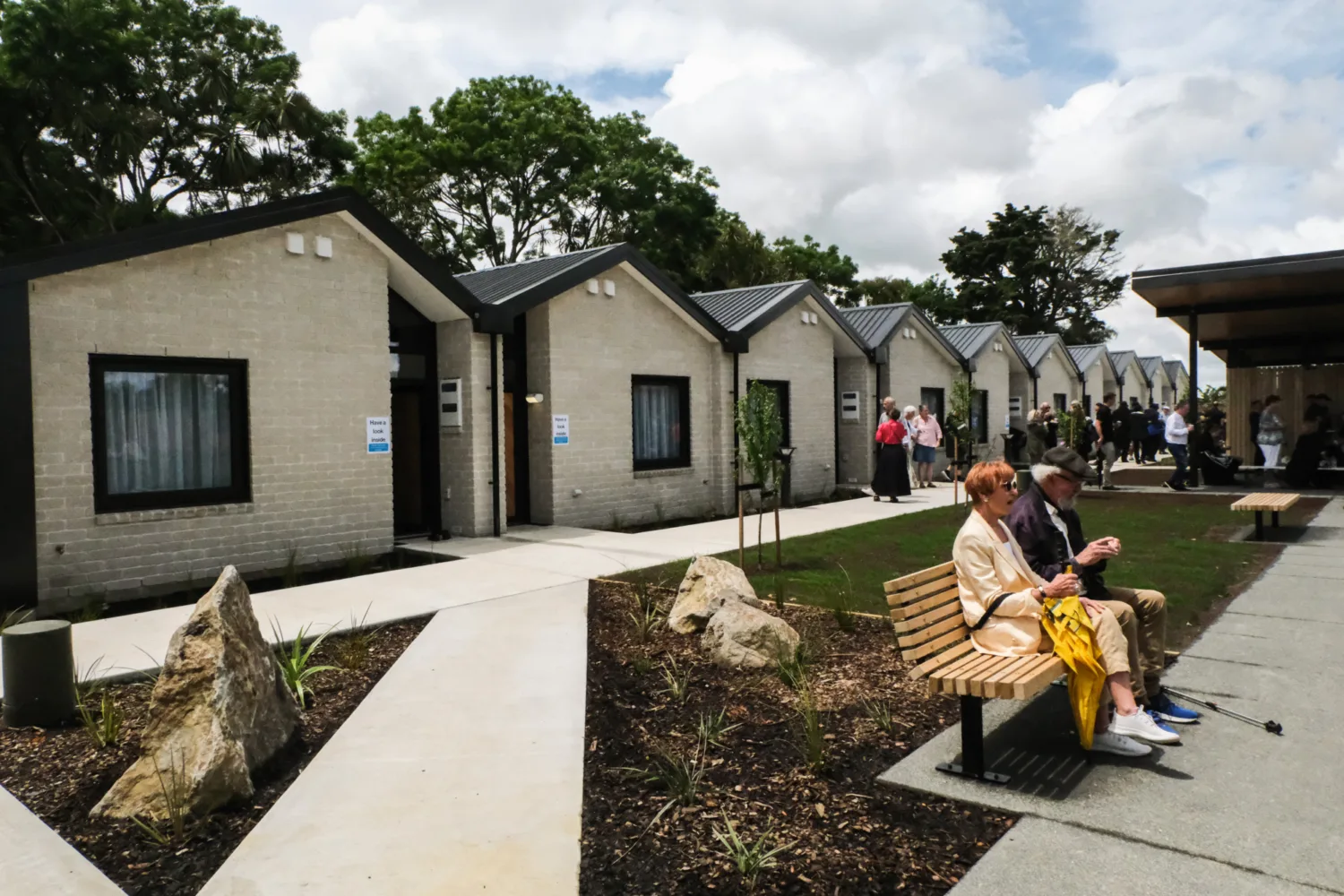
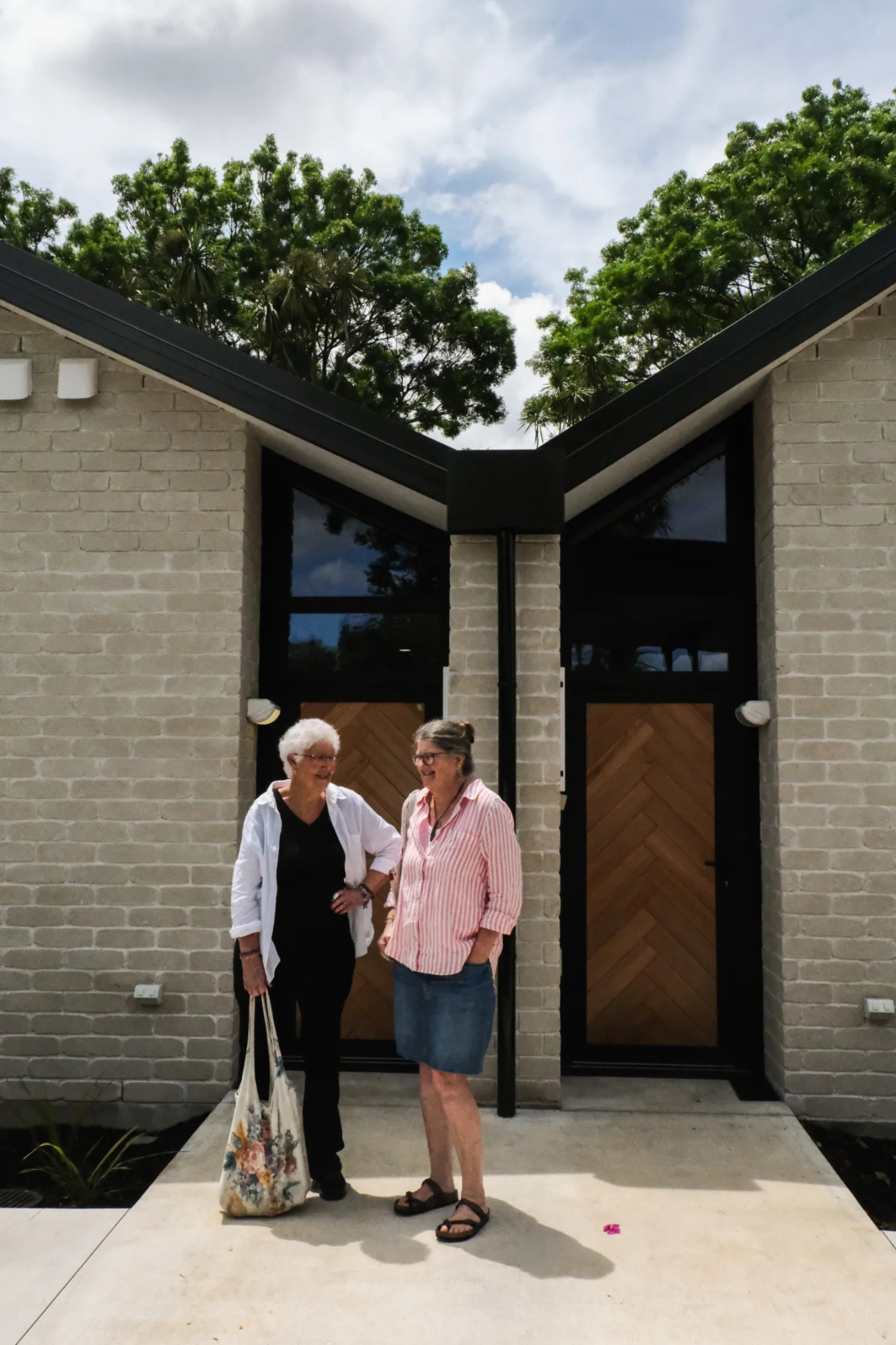
Named Waihōanga, and located on 469 State Highway 14, close to Whangārei Hospital the development provides 26 purpose-built, one-bedroom homes designed specifically with older persons changing needs in mind. Fourteen are single-level terrace homes and 12 are walk-up apartments, with 20 of the homes fully accessible and level entry and the remaining six incorporating universal design.
Conrad LaPointe, Habitat Northern and Southern CEO says "We have invested significant time and resources into ensuring this development recognises its surrounding environment within an existing community, so it provides a sanctuary for those that will call it home. We have also strived for the highest design and build standards to add value to this wonderful town that many of our staff live and work in."
Affordable housing without compromising on quality
From the start, the approach to Waihōanga was intentional.
Rather than simply delivering the maximum number of homes possible, Habitat designed a community around how older people would live there. Accessibility, quality and longevity were considered from the beginning, with whole-of-life costs considered, and durable, low-maintenance materials selected to ensure the homes are built to last.
The aim is to create an affordable alternative to retirement living at the same high standard, ensuring affordability did not come at the expense of the quality of the homes or wider environment.
That philosophy can also be seen in what Habitat chose not to build. Rather than maximising density, that additional space has been used for landscaping, private outdoor areas and places where residents can come together.
At the heart of Waihōanga is a communal lawn and pavilion, surrounded by native landscaping, fruit trees and space for future kai gardens. Each home also has its own covered private deck or patio.
The result is a development designed not only around the homes themselves, but around the community that will form between them.
Homes designed to work as people's needs change
Accessibility was treated with the same intent.
Habitat worked with Lifemark, New Zealand's leading accessible home rating body throughout the design process, with all homes receiving either the highest standard of 5-Star Accessible certification or 4-Star Sustainable Ageing certification.
The homes include features such as step-free access, wider doors and corridors, wheelchair turning spaces, roll-in showers, slip-resistant bathroom flooring and accessible kitchen layouts. Bathroom walls have also been reinforced so equipment such as grab rails and seats can be installed in the future, while mobility scooter charging and storage has been incorporated outside homes.
The significance of that approach extends beyond Waihōanga. Analysis of 626 building consents in Whangārei over a 12-month period found just 2 per cent met even a baseline accessible standard, with only 9 per cent providing level access into the home.
A partnership responding to Whangārei's housing need
Whangārei District Council partnered with Habitat for Humanity to help deliver Waihōanga, bringing together Habitat’s community housing expertise with Council’s focus on increasing housing options for older people. Council has committed to purchasing eight of the 26 homes for older residents with limited financial means, provided pensioner housing data that helped inform the development, and contributed towards a raised pedestrian crossing near the site.
“It’s fantastic to see Waihōanga completed and ready to become home for older people in our community. Council’s investment in eight of these homes means more older residents with limited financial means will have access to quality, accessible housing, and shows what can be achieved when Council and organisations like Habitat work together,” says Council Community Development Chairperson Deb Harding.
Construction began on 6 January 2026 and was completed on 6 November 2026, delivering Waihōanga in a 10-month building programme, or approximately 12 months including civil works and earthworks.
With the build now complete, Waihōanga adds 26 affordable homes to Whangārei's senior housing supply, purpose-built around accessibility, longevity and the needs of the people who will make the community home.
A community connected to its whenua
The land itself has also helped shape Waihōanga.
An established native kauri and tōtara grove has been retained at the heart of the community, with the design and construction carefully worked around significant trees following advice from the project arborist and Te Parawhau.
Te Parawhau worked alongside Habitat through the development, including providing a Cultural Impact Assessment and supporting the care of the whenua, protection and preservation of the kauri and tōtara, and development of the communal spaces. Te Parawhau also gifted the new community its name, Waihōanga.
One tōtara that needed to be removed has also remained part of the development in a different form. Its timber was milled by Paul Leonard and Sons and crafted into herringbone timber inserts for the front doors of the homes, carrying part of the original site into each whare.
Other elements have been given a second life too. Mulch from the site clearance was reused throughout the landscaping, rocks have been incorporated into landscape features, and historic boundary rock walls were rebuilt as part of the finished development.


Can I make a donation over the phone or via internet banking?
If you wish to make a donation via credit card over the phone, please phone us on (09) 579 4111
You can donate via internet banking:
Habitat for Humanity New Zealand
ANZ
06-0177-0127197-00
If you wish your donation to go to a specific appeal, please include in the payment Reference. If you know your 'supporter ID number' please include it in the Particulars.
Yes. If you make a one-off donation through our website, your receipt will be emailed to you automatically.
If you donate via internet banking, we'll email your receipt within 4-5 business days. If no email address is provided and we have a postal address for you, we'll send your receipt by post.
If you've made a donation by bank transfer and would like a receipt, feel free to email your details to info@habitat.org.nz so we can match your donation and send your receipt.
If you've chosen to donate regularly, we'll send you a single annual receipt after the end of the tax year (31 March), which can be used to claim your donation tax credit from Inland Revenue (IRD).
Donations over $5.00 are tax deductible. You can submit your receipt to IRD website, and they will process your tax rebate.
Yes, you can give regular monthly donations to your chose Habitat for Humanity appeal. Just select 'give monthly' when processing your donation payment.
You can change, cancel or suspend your monthly donation at any time. Please email us at info@habitat.org.nz, or phone us on (09) 579 4111.
Your credit card will be charged once you submit your first monthly gift, and future donations will be made on that same day going forward. If you wish to change your payment date to better suit your pay cycle, please get in touch via information@habitat.org.nz, or phone us on (09) 579 4111 and we can easily action that for you.
Yes, you will receive an annual tax receipt at the close of the financial year, recording all donations.
Yes, if you wish to donate via internet banking, our details are
Habitat for Humanity New Zealand
ANZ
06-0177-0127197-00
If you wish your donation to go to a specific appeal, please enter into your Reference
One tax receipt recording all your donations for the financial year, making it easy to claim your tax rebate.
With small payments spread out month to month, becoming a HopeBuilder can suit any budget. Even a small amount can have a huge impact.
Your donation occurs automatically each month, and you can pause, downgrade, upgrade, or cancel at any time.
Your regular support ensures long-term impact, all year long.
Please fill in the below enquiry form and we will be in touch soon.
Please fill in the below enquiry form with your details and we will be in touch within 2 working days.